
Market trend of imaging colorimeters
The global imaging colorimeter market reached a value of USD 2.87 billion in 2024 and is projected to continue growing at a compound annual growth rate (CAGR) of 12.3%. By 2030, it is anticipated to surpass the USD 5.8 billion mark. In China, the market for high-performance imaging colorimeters reached RMB 4.87 billion in 2025, marking a year-on-year growth of 12.3%. It is expected to grow to RMB 5.47 billion in 2026, representing a 12.3% increase and continuing the stable growth trend of the past few years. By 2030, the market for imaging colorimeters and photometers in China is projected to reach approximately RMB 15 billion, with a CAGR of around 12%.
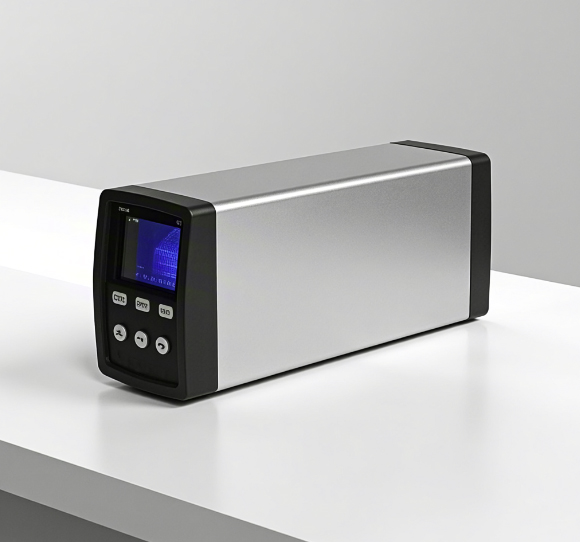
With the rise of new display technologies such as OLED and Mini-LED, the demand for imaging chromameters in the field of display device testing continues to grow. These technologies have increasingly high requirements for light source quality, brightness uniformity, and color accuracy, thereby driving the demand for higher precision and more efficient measuring instruments.
The development of automotive electrification and intelligent cockpits has driven the deepening application of imaging chromameters in the field of optical component testing for in-car displays, head-up displays, and ambient lighting. To ensure driving safety and consistency in visual experience, original equipment manufacturers (OEMs) and tier-one suppliers have raised higher requirements for the accuracy and stability of visual inspection.
With the deepening of industrial intelligent transformation, imaging chromameters are becoming increasingly widely used in the field of industrial automation. For instance, in the process of intelligent manufacturing, imaging chromameters can be utilized to detect color consistency, surface defects, and other issues of products.
In Asia and South America, with the increasing penetration of technology and the rapid development of manufacturing, the demand for imaging colorimeters will gradually grow.
Currently, Haopujia has achieved technical benchmarking for some models through independent research and development. In the future, it is expected to further increase its market share through technological innovation and market expansion.
HOT PRODUCTS

Portable Colorimeter Spectrophotometer HC-700D
Colorimeter

HW-110 Upgrade Haze Meter
Haze meter

handheld Colorimeter HC-210
Colorimeter

Single Angle Gloss Meter HG-300
Gloss meter
HEAD OFFICE
| TEL: | (86)21-34624180 |
|---|---|
| Email: | pschina2001@outlook.com |