
From a single point to an entire surface: The ongoing revolution in color difference measurement
Those who have experience in quality control are aware of a pain point: traditional colorimeters measure the L*a*b* value of "one point", calculate a ΔE, and then determine whether it is qualified or not.
However, when a piece of fabric has a gradient print or an injection-molded part has uneven color, single-point data can deceive.
This is precisely the hurdle that the industry is currently overcoming: moving from single color measurement to the simultaneous acquisition of spectral and spatial information.
What is the essence of change? Previously, the question that a colorimeter answered was "Is this point off-color?" Now, hyperspectral imaging answers "Which area is off-color, why, is it a pigment problem or a gloss problem?" Each pixel is no longer just a ΔE value, but a complete spectral reflectance curve.
The technical path has been successfully explored. Taking the hyperspectral colorimeter as an example, it adopts prism-grating dispersion spectroscopic imaging technology, covering a single area of 30cm×20cm, equivalent to 346,000 measurements by traditional colorimeters. The spatial recognition accuracy reaches 0.4mm, and the entire sample can be scanned in less than a minute. Mixed color samples, metallic pearlescence, and multi-color printing - these nightmares of traditional equipment are dismantled one by one through pixel-level spectral analysis.
The more cutting-edge direction is chip integration. The metasurface spectral imaging chip developed by the team at Tsinghua University integrates over 150,000 microspectrometers on a 0.5 square centimeter chip, achieving a spectral resolution of 0.8nm. It completes "snapshot" spectral imaging with a single exposure, eliminating the need for mechanical scanning. This means that spectral sensing capabilities have the potential to be integrated into mobile phones, production line equipment, and even wearable devices, just like cameras are today.
The demand from the application side is real and urgent. Textile printing requires color difference positioning zone by zone, automotive paint requires ΔE≤0.5 and full surface coverage, and agricultural scenarios need to identify water and nitrogen deficiency from leaf spectra - none of these can be solved by a single point ΔE.
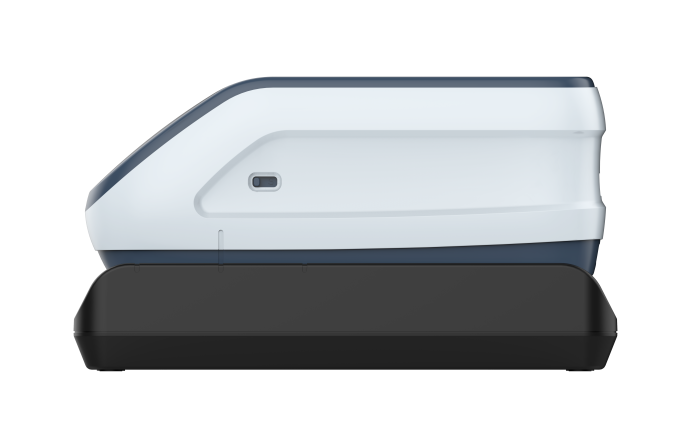
From "measuring color difference" to "identifying substances",Hao Pujia colorimeter is evolving in the same way, transitioning from a quality inspection tool to an instrument that senses the substance itself. This transformation is happening quietly, but the direction is irreversible.
HOT PRODUCTS

Portable Colorimeter Spectrophotometer HC-700D
Colorimeter

HW-110 Upgrade Haze Meter
Haze meter

handheld Colorimeter HC-210
Colorimeter

Single Angle Gloss Meter HG-300
Gloss meter
HEAD OFFICE
| TEL: | (86)21-34624180 |
|---|---|
| Email: | pschina2001@outlook.com |